
"Thanks for organisingsuch a nice event;chilled out and relaxed.Kids enjoyed it & lovedit. Team Andalus!! GreatJob Masha’Allah" - Omar Chandor


|
Activities / Detail
Zoom


Anon , Student
Anon , Student
Anon , Student
Tafsir and Tajweed of Short Surahs
Date:
7th June 2011 to 2nd August 2011
Location:
Andalus Building, 211 New City Road, Glasgow, G4 9PA - Details
Day/Time:
Tuesday
10:00 - 12:00
Book Your Place Now
Spaces available!Hurry, they're limited :)
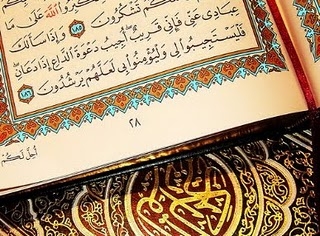
Tafsir - will include the explanation and exploration of the treasures of Surah al-Fatiha and the last short Surahs of Quran.
Tajweed - the course will be covering MakhÄrij (places of articulation) and Sifaat (characteristics) of letters and other key topics. It will combine relevant theory with essential practical skills. .
When: Tuesday Mornings at 10.00 am -12 noon starting from 7 June 2011.
Books

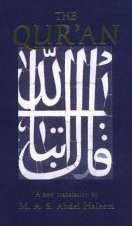
Qur'an
by Muhammad Abdel Haleem


by Muhammad Abdel Haleem
'Read! Your Lord is the Most Bountiful one who taught by the pen, who taught man what he did not know.' The Qur'an, believed by Muslims to be the word of God, was revealed to the Prophet Muhammad 1400 years ago. It is the supreme authority in Islam and the living source of all Islamic teaching; it is a sacred text and a book of guidance, that sets out the creed, rituals, ethics, and laws of the Islamic religion. It has been one of the most influential books in the history of literature. Recognized as the greatest literary masterpiece in Arabic, it has nevertheless remained difficult to understand in its English translations. This new translation is written in a contemporary idiom that remains faithful to the original, making it easy to read while retaining its powers of eloquence. Archaisms and cryptic language are avoided, and the Arabic meaning preserved by respecting the context of the discourse. The message of the Qur'an was directly addressed to all people regardless of class, gender, or age, and this translation is equally accessible to everyone.
Muhammad Abdel Haleem was born in Egypt, and learned the Qur'an by heart from childhood. Educated at al-Azhar, Cairo, and Cambridge Universities, he has taught Arabic and Islamic Studies at Cambridge and London Universities since 1966, including courses in advanced translation and the Qur'an. He is now Professor of Islamic Studies at the School of Oriental and African Studies, University of London. He is also working on An Introduction to the Qur'an and English Translations of the Qur'an: The Making of An Image. He is the Editor of the Journal of Qur'anic Studies and the London Qur'an Studies series.
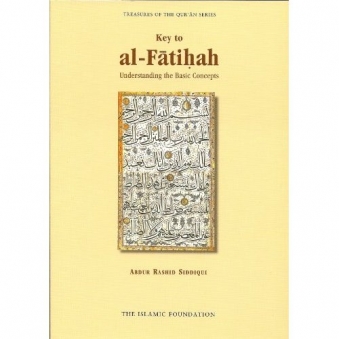
Key to Al-Fatiha: Understanding the Basic Concepts
by Abdur Rashid Siddiqui
by Abdur Rashid Siddiqui
Abdur Rashid Siddiqui gained an honours degree in Economics and Politics from the University of Bombay and has a law degree from the same University. He completed his postgraduate study in Librarianship in London and was elected to the Associateship of the Library Association. He worked as an Information Librarian at the University of Leicester from 1966 until his retirement in 1997. He is the author of number of books and articles on a variety of subjects. His recent book published by the Islamic Foundation is Lift Up Your Hearts: A collection of 30 Khutbah for Friday Prayer. His forthcoming publications are: • Key to Al `Imran • Keywords of the Qur'an He has been deeply involved in Islamic activities for many years, such as Secretary General of the UK Islamic Mission and Chairman of the Shura Council of the Islamic Society of Britain. Key to al-Fatihah analyses basic concepts contained in the keywords of the opening chapter of the Glorious Qur'an. The dominant vocabulary in the modern world is that of the secular-Christian and Western ideology and its institutions. In order to appreciate the message of the Qur'an understanding the concepts which each Qur'anic term conveys is essential. Unless these concepts are fully understood one cannot benefit and be inspired by the Divine Book of Guidance. Brief notes on the keywords will help to clarify and provide understanding about the dynamic ideas portrayed in the Majestic Qur'an. The Islamic Foundation is an educational and research organization devoted to making Islam a living reality in our age. For this purpose, it aims to improve human communication and develop a better understanding of Islam among all people o£ the world, Muslim and non-Muslim, so as to galvanize man to the message and ideal of One God and the unity of mankind, as brought by all the Prophets of God throughout the ages, last of whom was the Prophet Muhammad (blessings of Allah and peace be on him). The Foundation has research units in Islamic Economics, Christian-Muslim Relations, and Literature for Children. Its regular publications include Muslim World Book Review containing an Index of Islamic Literature (quarterly), Encounters: Journal of Inter-Cultural Perspectives (bi-annually) and Review of Islamic Economics (bi-annually). Markfield Institute of Higher Education, Leicester, UK, a subsidiary of the Foundation, awards MA/ MPhil/ Ph.D degrees and Post-Graduate Diploma and Certificate in Islamic Studies in partnership with the University of Portsmouth, UK.