
"Andalus is good for thefamily, has a friendlyatmosphere and teachesIslam in an enjoyable andfun way." - Abida Farid, Housewife


|
Events / Detail

Zoom


Jamil , IT consultant
Atif Bashir , Dentist
Shada , Housewife
Inspirational Leadership of Umar al-Farooq
Location
Address and Google map to help you get here...
View Larger Map
Location:
Andalus Building, 211 New City Road, Glasgow, G4 9PA - Details
Day/Time:
10:00 - 17:00
Saturday
16th Jul 2011Event Ended
Umar Ibn Al-Khattab was a leader, a statesman, a pious and God conscious Muslim who showed respect for all individuals whether Muslim or not.
Under the leadership of Umar ibn Al-Khattab Islam spread widely by virtue of its beauty, simplicity, transparency, openness and the leadership provided by him.
The Prophet (saw) said that if there had been a Prophet after him (saw), it would have been Umar.
What were the secrets of his success? What was his leadership style? How did he do it?
Learn all this and more at this fascinating, interactive course on Inspirational leadership in the example of 'Al-Farooq'.
Teachers


Shahid Akmal
Shahid Akmal is the Managing Director of Exquisitus Ltd, a Management and Consultancy company that specialises in Diversity and Islamic Cultural Awareness training and development. He has trained many of the UK’s leading organisations and companies including the NHS, Metropolitan Police and the Greater London Authority. He is also our lead trainer and has also written, planned and presented a number of TV programmes, the most popular being ‘Ramadhan Reflections’, on Zee TV for the last three years.
Shahid is a member of the UK Interfaith Network and a regular speaker on the University and College circuit. He has delivered talks to audiences of all faith (and non-faith) backgrounds in the UK and abroad. He has participated in dialogue / debate many times and is regularly the Muslim contributor to the Jewish / Christian / Muslim '3 Faith Forum' trilogues. He serves on the Harrow Metropolitan Police Consultative Committee Group. He was the Muslim contributor at the commemorative service for Diana, the Princess of Wales at the Peterborough Cathedral.
Downloads
These files are relevant to this event. Please right-click and download to your computer.
These files are relevant to this event. Please right-click and download to your computer.
Books

Umar - Makers of Islamic Civilisation
by Shibli Numani


by Shibli Numani
Honoured by Sunni Muslims as the epitome of the just ruler, 'Umar, or Omar - the second Caliph - is one of the most significant figures in early Islamic history. His rule (634-44 CE) laid the foundations of an empire that has since defined, both culturally and geographically, the heartlands of the Islamic world. Shibli Numani's classic account (now revived, having been unavailable for decades), links the military conquests of the period with 'Umar's reforms in law, government and public administration. He describes the personal strengths, skills and character of 'Umar and evaluates his contribution to the ethos of Islam.
Shibli Numani was a distinguished Urdu scholar of Arabic and Persian who was active in the latter half of the nineteenth century. He was one of the circle of Indian Muslim intellectuals who, led by Sir Syed Ahmad Khan, founded Aligarh Muslim University in 1875.
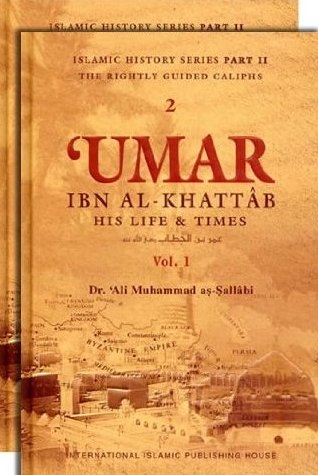
'Umar ibn al-Khattab: His life and times (2 vols)
by Ali Muhammad as-Sallabi
by Ali Muhammad as-Sallabi
Umar Ibn Al Khattab His Life & Times (2 Vols)
We are living in the tumultuous times, but they are no less tumultuous than the era of Umar ibn Al Khattab, whose life begin in Jahiliyah and ended in the Golden Age if Islam. We can lean much from the history of this second caliph of Islam, who was faced with unprecedented challenges but met them successfully within the framework of shari'ah and in accordance with the true spirit of Islam
For those who would be leaders, this book offers the model of an ideal Muslim leader, one who felt responsible before Allah for the well being of all those under his rule, including his troops, women, infants, non-Muslim subjects and even animals. 'Umar was a "hands on" leader who kept himself informed and consulted scholars and experts before every major decision
For the rest of us, this book offers a window into an exciting and important period of Islamic history, and it also reminds of an important lesson, that our strength comes not from wealth or money or status, but from our submission to Allah and our commitment to the path of Islam.
URLs
Websites with related content that will be of interest for those attending the event.
Websites with related content that will be of interest for those attending the event.
Location
Address and Google map to help you get here...
- Andalus Building, 211 New City Road, Glasgow, G4 9PA
View Larger Map

